It’s 7:15 am on a damp Tuesday. You’ve just stepped out of a hot shower, the kind that feels like a luxury escape, and you reach for the glass to check your reflection. Nothing. Just a wall of opaque, grey condensation. You wipe it away with a towel, leaving streaky, water-spotted glass that somehow looks even worse than before. You’re left trying to shave or apply skincare in a room that feels more like a sauna than a sanctuary.
After 11 years in the lighting showroom trade, helping homeowners transition from "I just need a light" to "I want a spa-level ritual," I’ve seen thousands of bathroom refits ruined by poor planning. The fogged mirror isn't just an annoyance; it’s a symptom of a space that isn't working for you. Let’s talk about how to solve this, elevate your morning, and avoid the trap of buying "smart" technology that you'll end up resetting every three weeks.
The Science of the Fog
Before we look at the hardware, let’s understand the enemy. Fog is condensation—the transition of water vapour into liquid as it hits the cooler surface of your mirror. In a bathroom, you have two variables: high humidity and temperature differentials. To stop the fog, you either need to manage the air or manage the glass itself. And no, rubbing dish soap on the glass isn't a long-term renovation strategy.
Solution 1: The Mirror Demister (The Industry Gold Standard)
If you are planning a renovation, do not—I repeat, do not—skip this. A mirror demister is essentially a thin, self-adhesive heat pad that sticks to the back of your mirror. When you turn on your mirror lights, the pad warms the glass to a few degrees above the ambient room temperature. If the glass stays warm, https://cleaningservicesgrandrapidsmi.com/how-long-do-led-bathroom-mirrors-usually-last-a-consultants-reality-check/ the condensation physically cannot settle on it.
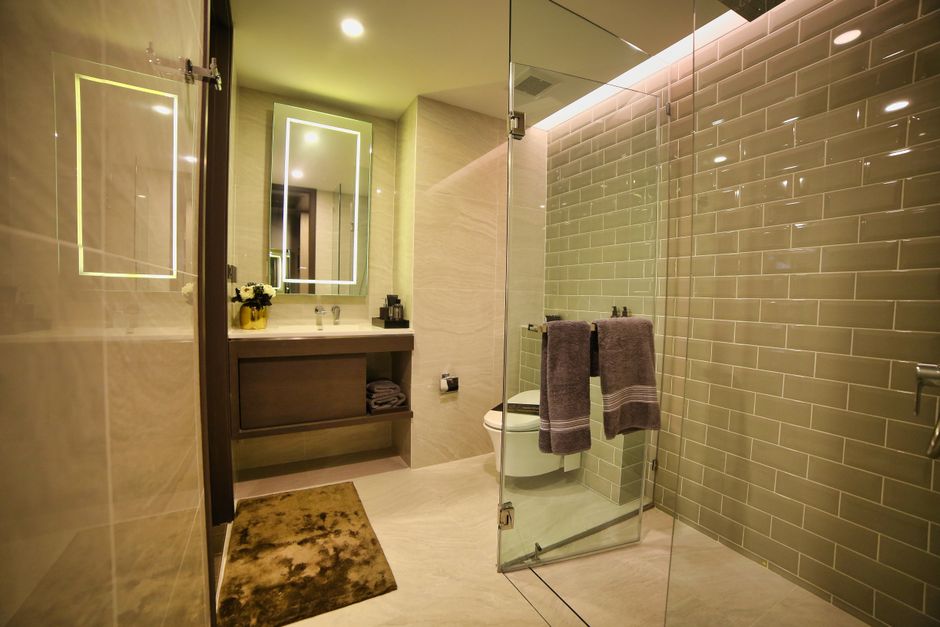
In a showroom, we’d always spec these as part of the primary lighting circuit. You flip the switch to turn on your task lighting, and by the time you’ve dried off, the glass is perfectly clear. It’s elegant, it’s invisible, and it doesn't require a master's degree in engineering to operate.
Why it’s better than "Smart" gadgets:
- It doesn't require a Wi-Fi connection. It doesn't have an app that will inevitably stop working after a firmware update. It is purely functional—exactly what you want at 7:00 am when your brain is still half-asleep.
Solution 2: Rethinking Your Bathroom Ventilation
If your mirror is constantly fogging up, your bathroom might have a ventilation problem. I’ve seen too many developers put in "budget" extractors that sound like a landing aircraft but move about as much air as a gentle breeze. If the steam hangs in the air for more than ten minutes after your shower, your extraction isn't sized correctly for your room volume.
Bathroom ventilation tips:

Check your CFM (Cubic Feet per Minute): Most people need a much higher extraction rate than they think, especially in smaller, tile-heavy bathrooms. The Overrun Timer: Make sure your extractor has a timer. It should keep running for at least 10–15 minutes after you turn off the light to clear the humidity. Maintenance: Clean the dust off your extractor fan grille. Most people forget this, and it cuts efficiency by 50% or more.
The Rise of the LED Mirror: Multi-function or Just Messy?
The "smart" bathroom is the next big wave, and the anti-fog bathroom mirror is the anchor. These are now arriving with all sorts of bells and whistles—built-in Bluetooth speakers, touch-sensitive dimmers, and colour-temperature controls.
Look, I love tech, but I hate clutter. If you buy a mirror with a Bluetooth speaker built-in, you are essentially buying a speaker that is doomed to have poor acoustics because it’s mounted to glass in a humid environment. It’s another gadget to pair, another device to troubleshoot, and frankly, another way to introduce messy cables behind your vanity.
If you’re choosing an LED mirror, look for one that prioritizes two things: Colour Rendering Index (CRI) and Demister integration. Avoid anything with a "cool" blue light. At 7:00 am, the last thing you want is the clinical, blue-white lighting of an operating theatre. Aim for 2700K to 3000K (warm white) for a flattering, hotel-inspired glow.
Comparison of Mirror Solutions
Solution Effectiveness Complexity Verdict Mirror Demister Pad High Low The professional’s choice for long-term reliability. High-Flow Extractor Fan Medium/High Medium Essential for overall room health, not just the mirror. "Smart" App-Controlled Mirror Medium High Usually a gimmick. Avoid if you want a reliable bathroom. Wiping with a Towel Low Very Low Don't do this. It leaves streaks and ruins your morning.Wellness and the Hotel-Inspired Ritual
Why do we love luxury hotels? Because everything is invisible. The lights come on automatically, the mirror never fogs because it’s pre-warmed, and there are no stray cables or tangled Bluetooth dongles. Your home bathroom should be a place of wellness, not a place where you’re fighting with technology.
By installing a quality mirror with a dedicated demister and ensuring The original source your ventilation is up to scratch, you’re not just fixing a technical problem. You’re curating a ritual. When you walk into your bathroom on a Tuesday morning, the glass is clear, the light is warm, and the air is fresh. That is the definition of a well-designed home.
Final Thoughts from the Showroom Floor
If you're currently in the middle of a refit:
- Insist on a hardwired demister pad. Don’t rely on a "magic" glass spray. Prioritize light quality over "smart" features. A beautiful mirror with great CRI (90+ is ideal) will do more for your mood than a Bluetooth speaker ever will. Keep it simple. If a product requires you to download an app just to change the brightness, walk away. You will forget that app exists within a month, and you will be stuck with a setting you hate.
Stop fighting the fog. Invest in the right hardware once, and reclaim your 7:00 am routine. Your reflection—and your stress levels—will thank you.