In today’s residential remodels, mirrors have evolved far beyond their simple reflective purpose. From classic glass plates to high-tech illuminated and smart mirrors, homeowners and designers now choose mirrors that integrate lighting, anti-fog features, and even digital displays. Yet, despite the allure of electronics-enhanced mirrors, many still hesitate, feeling that incorporating electronics behind a glass surface introduces risks plain glass simply doesn’t carry. What underlies this hesitation? Is it just familiarity, or are there intrinsic challenges when merging electronics with mirrors?
In this post, we dive deep into why electronics in mirrors feel risky compared to plain glass, drawing from industry standards such as those from the National Kitchen & Bath Association (NKBA), insights from lighting brands like Golden Lighting and Lumens, and the crucial coordination between trades such as glaziers and electricians. We’ll uncover key functional decisions tied to mirror types, sizing rules related to lighting layout, placement heights, sconce spacing, and the distinction between task and ambient lighting.
Mirror Types as Functional Decisions
When specifying a mirror, most architects and remodelers know to consider shape, size, storage, and mounting style, but adding lighting and electronics turns mirror selection into a highly functional design decision.
Plain Glass Mirrors
Plain glass mirrors are the “set it and forget it” option. The classic polished edges, simple mounting, and lack of integrated electronics make them inherently stable choices. These mirrors can last for decades without service or worry, powder room round mirror supported by skilled glaziers who template and install plate glass with precision.
Illuminated Mirrors with Electronics
Circa the last decade, we’ve seen a surge in mirrors with integrated LEDs, demisters, and smart features. These are often hardwired by electricians, requiring added feeds and coordination with the lighting layout. Brands like Golden Lighting specialize in combining classic sconce lighting with backlit or front-lit mirrors, while retailers like Lumens offer extensive product lines embracing technology.
- Shape & Mounting: Electronic mirrors tend to have sleek rectangular or rounded shapes to accommodate LEDs uniformly and smart sensors. Storage: Some feature hidden compartments, but this adds further complexity and humidity concerns. Lighting: Integrated LED arrays mean the mirror itself becomes a light source, shifting traditional lighting layout paradigms.
Why Are Functional Decisions Critical?
The choice impacts longevity, maintenance, and user experience. Each decision around electronics—be it a demister pad or a Bluetooth speaker—increases potential failure points in humidity-prone bathroom environments. This contrasts with the durable simplicity of plain glass.

Sizing Rules Tied to Lighting Layout
A fundamental principle often overlooked: lighting always comes before mirror width. The National Kitchen & Bath Association (NKBA) and seasoned architects stress this to ensure balanced light and reflection that works ergonomically and aesthetically.
Why Prioritize Lighting Before Mirror Width?
Vanity mirrors must accommodate flanking sconces without crowding. Sconces typically require 60-70% of the mirror height and 6-8 inches clearance on each side for shadows-free task lighting.
Component Recommended Dimensions Reason Vanity Height 32" - 36" from floor to top of vanity Comfortable ergonomics for tasks like shaving or makeup Mirror Height 30" - 36" tall Aligns with sconce height and user line of sight Mirror Width Vanity width minus 12-16 inches Allows sconces flanking the mirror to have spaceWhen adding electronics, these sizing rules get more rigid. LEDs are placed behind or at the mirror surface, and with narrow widths, heat dissipation and wiring access are compromised.
Placement Heights and Sconce Spacing
Proper placement heights and spacing are essential for effective bathroom lighting, especially when electronics factor into mirror choice.
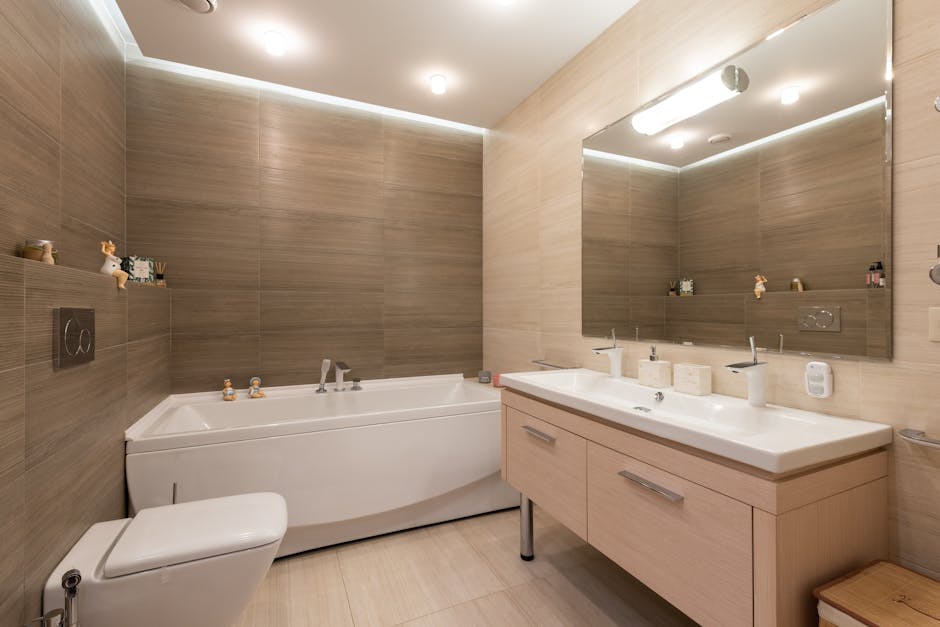
Sconce Height
According to NKBA guidelines, vertical wall sconces should center at about 60 to 66 inches from the finished floor—approximately eye level for most adults.
Sconce Spacing
Sconces need at least 28 to 36 inches apart, balanced around the mirror. When a mirror includes built-in LEDs:
- The mirror lighting dimension must complement sconces, not compete. Oversized mirrors with lighting can crowd out sconces, reducing layering options for task + ambient light. Integration means electricians must coordinate wiring pathways so sconces and mirror LEDs don’t overload circuits or clash physically.
This interplay between lighting types proves why oversized illuminated mirrors sometimes feel visually overwhelming and riskier to maintain than plain mirrors with separate, replaceable sconces.
Task Lighting vs Ambient Lighting
One of the biggest advances in bathroom lighting is differentiating task and ambient illumination:
- Task Lighting provides focused, shadow-free illumination necessary for activities requiring precision, such as shaving and makeup application. Ambient Lighting offers a softer, overall illumination that sets mood and general visibility.
Adding electronics to mirrors often tries to merge both tasks into a single unit, which has pros and cons:
Smart mirrors with dimming LEDs and color temperature control can switch between task and ambient modes. However, these electronics age faster than glass and can fail, dimming performance unpredictably. Reliance on one device means if the mirror electronics fail, both task and ambient options are lost simultaneously.Lighting product experts at Golden Lighting advocate using mirrors as part of a layered lighting scheme rather than the sole light source, reinforcing the idea that multitasking mirrors feel riskier.
Smart Mirror Failure Points
Electronic mirrors are elegant but come with unique failure points that plain glass avoids:
- LED lifespan and color shift: LEDs degrade differently than glass, leading to uneven lighting or color temperatures drifting over time. Demister pads: Often adhesive-backed films behind the glass can delaminate or short-circuit. Wiring vulnerabilities: Added feeds for LEDs and smart functions require impeccable waterproofing. Moisture intrusion can short circuits, corrode contacts. Touch controls and sensors: Multiple electronics layers increase failure risk from humidity. Cheap frames or unsealed edges: Many failures trace back to poor sealing, which allows moisture ingress at glue points—a classic glazier and installer issue.
Keeping electronics isolated and serviceable is tough. Unlike plain mirrors, which can be swapped fast, fixing an electronic mirror often means entire replacement or rewiring.
Mirror Built to Last Decades
Every architect and remodeler dreams of specifying a mirror built to last decades. Achieving this in the electronics age requires deliberate choices:
- Start with lighting layout: Determine sconce position and type, then size the mirror accordingly to avoid crowding and overheating. Work closely with glaziers: Skilled templating and installation ensure proper sealants and edge treatments that keep moisture out. Coordinate with electricians: Hardwired LED mirrors require precise feeds and easy access for maintenance. Choose quality products: Brands offered by Lumens or Golden Lighting typically specify LEDs rated for longevity with warranty coverage. Demister pads and touch controls: Opt for demister yes. Dashboard maybe. (i.e., heated mirrors minimize fog but don’t overcomplicate control layers.)
Final Thoughts
Electronic mirrors undeniably represent a forward leap in bathroom design. Yet, their perceived risk compared to plain glass emanates not just from unfamiliarity but from tangible technical challenges: failure points from moisture, wiring, heat, and aging components that are simply absent in simple glass.
By respecting functional design decisions—starting with lighting, adhering to NKBA sizing and height rules, spacing sconces properly, and understanding the difference between task and ambient lighting—we can select mirrors that marry technology with longevity. Working hand-in-hand with glaziers and electricians in the planning stages is key to crafting mirrors that perform well today and maintain their brilliance decades from now.
Remember: electronics age faster than glass. Smart mirror failure points abound but can be managed. Mirrors built to last decades demand thoughtful specification—not just trend chasing or marketing hype.
With these insights, designers and homeowners can confidently embrace modern illuminated mirrors while mitigating the risks that have long made simple glass the default safe choice.